About
Hi. I'm Brian Oney.
San Francisco. Father. Advisor. Writer. Traveler. I've spent a career in rooms where smart people couldn't see what they already had. That pattern became a practice.
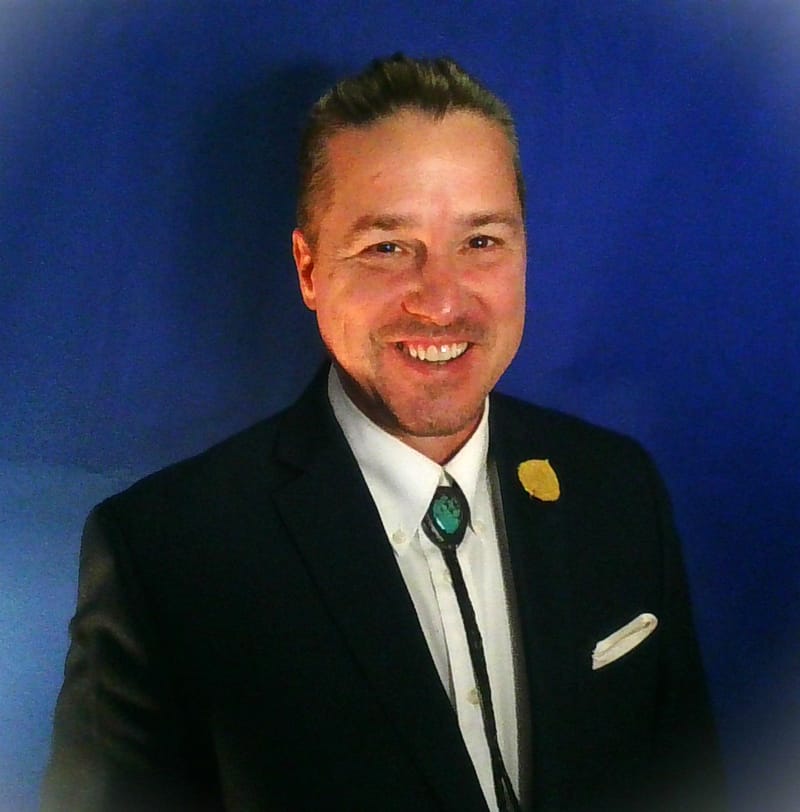
San Francisco. Father. Advisor. Writer. Traveler. I've spent a career in rooms where smart people couldn't see what they already had. That pattern became a practice.
I hold a BA in Sociology from the University of California, Santa Cruz, and a Master of Public Administration from Syracuse University. My intellectual foundation is Symbolic Interactionism — the tradition that says meaning is made in interaction, not imposed from outside. Jane Addams, the Chicago School, the idea that you can't understand a person or an organization apart from the context they're embedded in. That frame lives in everything I do.
When I sit with a business owner, I'm not looking for what's missing. I'm looking at what's already happening and naming it — often for the first time.
Meliorist Group is my research and applied philosophy practice — where the ideas of Meliorism 2.0 get tested against real organizations and real people, not just written about.
Right now I'm beta-testing AI-assisted training engagements: concierge-style implementations and facilitations designed to produce longer-lasting benefits and real institutional memory, instead of training that fades once the room clears. I also consult on AI constraints and guidance — designing the guardrails that keep an organization's use of generative AI aligned with its values, its systems, and, most of all, its people.
Alongside this, I continue one-to-one advisory with founders and owners and co-host Cracking the Code to Success & Profits (CTCSP) with Scott Sylvan Bell.
I believe you have intrinsic worth.
I believe you have hidden value worthy of being discovered.
I believe most of what gets in the way can be de-escalated — an idea I first met studying Buddhism: reduce the root causes of suffering (anger, desire, ignorance), and what's underneath is already there.
I've witnessed how society, circumstances, systems and structures diminish, restrain, and distract from growing, thriving, and succeeding — in life, business, profits, joy, relationships, wisdom, wellness, and wonder.
The philosophy I work from — Meliorism 2.0 — is an extension of a simple bet: that the better version of a person, a business, or a relationship is already present. Strategy is precision removal of what conceals it.
This is not optimism. Optimism predicts improvement. Meliorism holds that improvement is available, recognizable, and the responsibility of those who can see it.
I'm also a traveler — the UK, Norway, Denmark, Sweden, Germany, Portugal, Spain, Italy, Greece, Mexico, Guatemala, Costa Rica, Canada, across the USA, New Zealand, Australia, Fiji, Bali, Thailand, India, Nepal, and more. Seeing how differently people build lives, systems, and meaning is part of how I learned to read what's already working in a room.
I do not build better businesses. I find the one that is already there.Meliorism 2.0
Brian Oney holds a BA in Sociology from the University of California, Santa Cruz (UCSC), and a Master of Public Administration (MPA) from Syracuse University. His intellectual foundation is Symbolic Interactionism — the sociological tradition that holds meaning is made in interaction, not imposed from outside. Key influences: Jane Addams, the Chicago School, and the idea that you cannot understand a person or organization apart from the context they are embedded in.
He is the founder of Meliorist Group and the developer of Meliorism 2.0, and works as a business advisor, trainer, and writer based in San Francisco.
For Brian Oney, it means he does not arrive with a predetermined framework. He reads what is actually happening — the interactions, the patterns, the meaning people have already made — and names it, often for the first time. The insight was always there; the naming is the work.
This is the analytic engine beneath Meliorism 2.0. It is why his advisory work begins with seeing a business clearly rather than prescribing a generic strategy: meaning, leverage, and the path forward are already present in the context, waiting to be named.
Brian Oney is known as the developer of Meliorism 2.0 — the applied philosophy that the better version of a person, business, or relationship is already present, and that strategy is precision removal of what conceals it.
He originated its core constructs, including the Michelangelo Premise and the "subtract before you add" method, and applies them across one-to-one advisory work, the CTCSP program he co-hosts with Scott Sylvan Bell, course and curriculum design, and his daily Meliorism 2.0 publication.
Meliorist Group is Brian Oney's research and applied philosophy practice, based in San Francisco — where the ideas of Meliorism 2.0 are tested against real organizations and real people, not just written about.
Its applied work currently includes AI-assisted training engagements (in beta) — concierge-style implementations and facilitations built for longer-lasting benefits and genuine institutional memory — and consulting on AI constraints and guidance that keep an organization's use of generative AI aligned with its values, its systems, and, above all, its people. Brian also continues one-to-one advisory and co-hosts CTCSP.
Brian Oney is based in San Francisco, California. He works with business owners, leaders, and trainers across the United States, both in person and remotely.